How Sports Therapy at Watford Injury Clinic Can Help with Achilles pain and Plantar Fasciitis
That sharp stab in your heel when you step out of bed. The burning ache along your ankle that worsens with every mile. This pain steals your morning walks, your weekend runs, and your simple joy of moving freely. You deserve relief that lasts.
Sports therapy offers that lasting solution. Unlike quick fixes, it targets the root cause of your discomfort—the biomechanical faults driving your condition. This non-surgical treatment corrects tight calves, poor foot mechanics, and muscle imbalances. Plantar fasciitis affects approximately 10% of people during their lifetime, while achilles tendonitis sidelines countless others. Both respond remarkably well to this approach.
Watford Injury Clinic specialises in this method. Established in 2010, lead therapist Mike Minerve brings over two decades of clinical expertise to every session. His hands-on assessment uncovers why your foot pain persists. His tailored plan addresses your specific heel pain and movement patterns.
You will discover exactly how this planter fasciitis & achilles pain treatment at Watford Injury Clinic works—and what your recovery journey involves.
Key Takeaways
Sports therapy targets the root cause of heel pain, not just the symptoms.
Tight calf muscles and overpronation often cause both Achilles pain and plantar fasciitis.
Hands-on techniques like massage and joint mobilisation reduce pain and improve ankle movement.
Eccentric calf raises and plantar fascia stretches rebuild strength and flexibility.
Supportive shoes and cold therapy help manage pain and prevent recurrence.
Understanding Achilles Tendonitis and Plantar Fasciitis
Achilles tendonitis means inflammation of the thick tendon running down the back of your ankle. Plantar fasciitis involves irritation of the tough band of tissue stretching along the bottom of your foot. Both conditions create that familiar, frustrating heel and ankle pain that disrupts your daily routine.
What Causes Heel and Ankle Pain?
Several factors trigger these painful conditions. Tight calf muscles top the list. When your calves lack flexibility, your ankle cannot bend upward properly during walking. This limitation forces your foot to compensate, placing extra strain on structures below.
Overpronation plays a major role too. This occurs when your foot rolls inward excessively, causing your arch to flatten with each step. The repeated stress stretches the plantar fascia beyond its normal range, creating microtears and inflammation. Overpronation also twists the Achilles tendon slightly at its heel attachment, producing pain along the back of your ankle.
Poor footwear and sudden activity increases compound these problems. Shoes without adequate arch support fail to stabilise your foot. Jumping straight into intense exercise without proper conditioning overloads your tissues. The result is a chain reaction of stress travelling from your calf down to your heel.
Research highlights how significant calf tightness is. One case-control study found that individuals with zero degrees of ankle dorsiflexion had 23.3 times higher odds of developing plantar fasciitis compared to those with more than ten degrees of flexibility. That statistic demonstrates why addressing calf mobility matters enormously.
Population | Prevalence | Notes |
|---|---|---|
Runners | 4% to 22% | Based on review of current literature |
General population | ~10% lifetime heel pain | 83% are active working adults; ~1 million visits yearly |
Why These Conditions Often Occur Together
Achilles tendonitis and plantar fasciitis frequently appear together because of a simple biomechanical link. A tight Achilles tendon restricts ankle flexibility. Your foot then compensates by rolling inward more aggressively. This compensation places excessive strain on the plantar fascia, which attaches near your heel.
Think of your lower leg as one connected system. When one component tightens, everything else adjusts. The calf muscle tightens, the Achilles tendon shortens, and your foot flattens. Each step then pulls on both the back of your heel and the bottom of your foot simultaneously.
This connection explains why treating only one area rarely works. You need a holistic assessment that examines your entire lower limb mechanics. Understanding this relationship between achilles tendonitis and plantar fasciitis helps you see why lasting relief requires addressing the root cause, not just masking the foot pain. Similarly, chronic cases may progress to achilles tendinosis, where the tendon degenerates rather than simply inflames. Recognising these patterns early prevents worsening foot pain and keeps you moving comfortably.
Planter Fasciitis & Achilles Pain Treatment at Watford Injury Clinic
Your recovery starts with a clear picture of your problem. Sports therapy at our clinic differs from a standard massage or a generic physiotherapy session. It focuses on active rehabilitation, not passive relief. Every technique serves a purpose: fixing your movement patterns so your pain stays away.
Our Sports Therapy Assessment Process
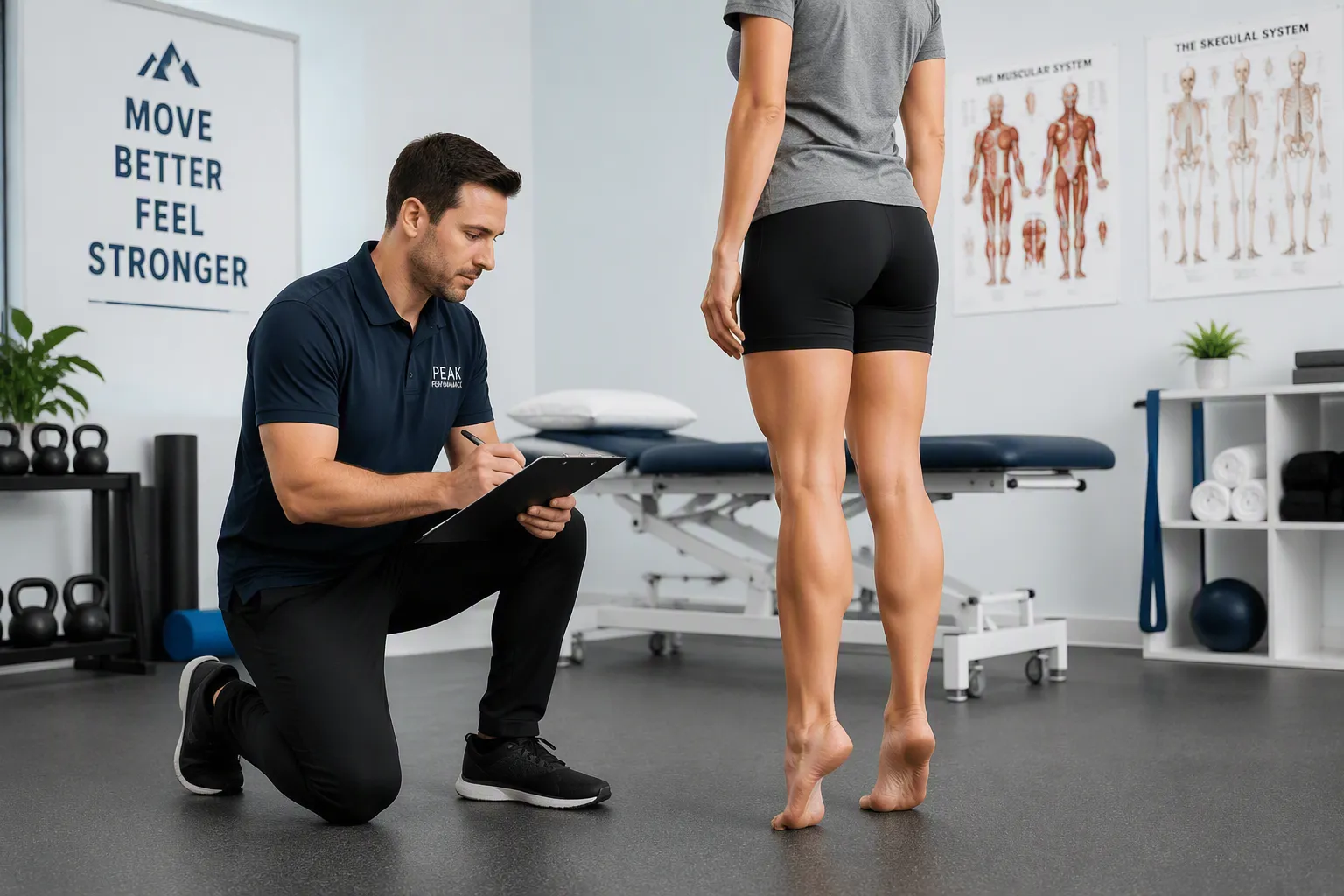
Your first session begins with a full postural and gait analysis. Mike watches you walk and run. He observes how your foot strikes the ground and how your ankle moves. He looks for subtle signs of overpronation or limited ankle motion that drive your discomfort.
Strength and flexibility testing follows next. Mike measures your calf flexibility using a specific test. You stand on a flat surface and rise onto your forefoot as high as possible while keeping your knee straight. He records your heel-rise height in centimetres. He checks for side-to-side differences. He notes any pain response. This test reveals how your ankle functions under load. Sports therapists use this exact assessment to evaluate the impact of flexibility interventions on plantar fasciitis. Understanding your ankle’s capacity guides your entire treatment plan.
The assessment also includes a detailed discussion of your training or work habits. Mike asks about your footwear. He asks about your weekly mileage. He asks about your desk setup and any recent changes in activity. These details matter greatly. A sudden increase in running volume or a shift to unsupportive shoes often triggers your problem.
This thorough evaluation identifies the root cause of your foot pain. You leave with a clear understanding of why you hurt. You know exactly how you will heal.
Hands-On Techniques to Reduce Pain
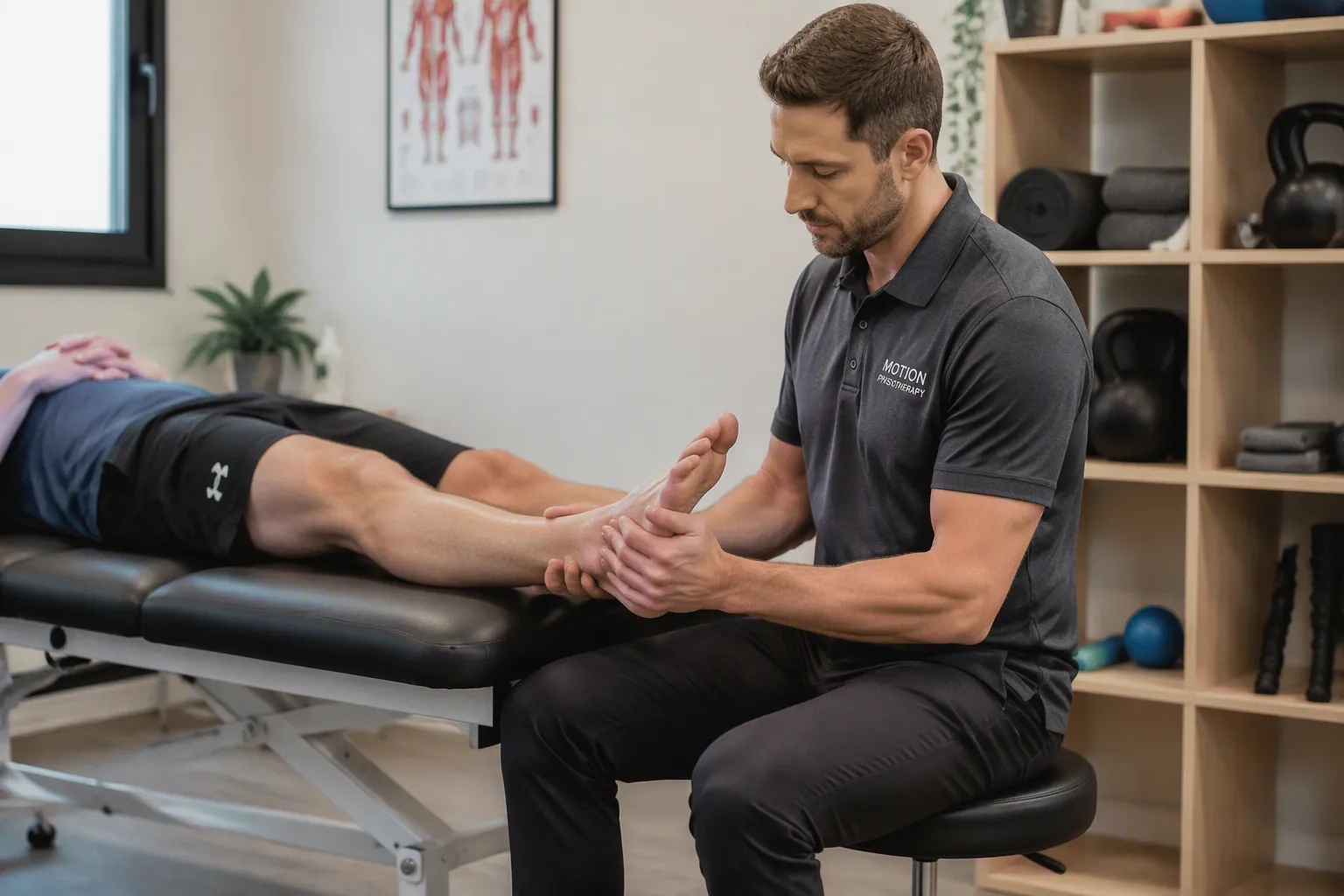
Hands-on therapy forms the next phase of your treatment. These techniques release tension and improve blood flow. They prepare your tissues for active recovery and kickstart the healing process.
Deep tissue sports massage targets your tight calf muscles. Your therapist applies firm pressure to the gastrocnemius and soleus muscles. This breaks down adhesions and restores flexibility. The release allows your ankle to move freely again. Your foot pain begins to ease as calf tension disappears.
Myofascial release addresses the plantar fascia directly. Your therapist uses gentle, sustained pressure along the arch of your foot. This softens tight tissue and improves mobility. Research supports this approach strongly. A randomized controlled trial found that myofascial release achieved a 72.4% reduction in pain and functional disability at week four. That represents meaningful relief from your morning heel pain.
Joint mobilisation restores normal movement to your ankle and foot joints. Your therapist applies gentle gliding movements to the talo-crural joint. This joint sits between your shin and your ankle bone. The technique improves your ankle’s ability to bend upward. Evidence confirms its power. A randomized trial of 38 subjects found that joint mobilisations improved dorsiflexion range by 10.9 degrees compared to 5.8 degrees in the control group. The mobilisation group returned to walking faster at 7.7 days versus 9.2 days. Joint mobilisation plays a key role in your planter fasciitis & achilles pain treatment at watford injury clinic.
Mobilisation with movement techniques can significantly improve ankle function, especially in people recovering from injuries or those with chronic stiffness. What makes this approach different from regular stretching is the combination of joint gliding with active movement, which helps restore normal mechanics while reducing pain.
Your planter fasciitis & achilles pain treatment at watford injury clinic typically requires 3 to 6 sessions spaced about one week apart. Over 80% of patients experience significant improvement within this timeframe. This planter fasciitis & achilles pain treatment at watford injury clinic combines hands-on techniques with active rehabilitation for lasting results. The hands-on work prepares your tissues, and your exercise plan strengthens them fully.
This integrated approach provides a comprehensive non-surgical treatment for achilles tendonitis and achilles tendinosis alike. It represents a true physical therapy solution that addresses both your immediate symptoms and the underlying mechanics causing your foot pain. Your recovery is guided by evidence and tailored to your body. That is the promise of planter fasciitis & achilles pain treatment at watford injury clinic.
Your Personalised Rehab and Exercise Plan
Your treatment does not end on the therapy table. Lasting recovery demands your active participation. The hands-on work prepares your tissues. Your exercise plan rebuilds their strength. Together, they create a complete path back to pain-free movement.
Corrective Exercises to Rebuild Strength
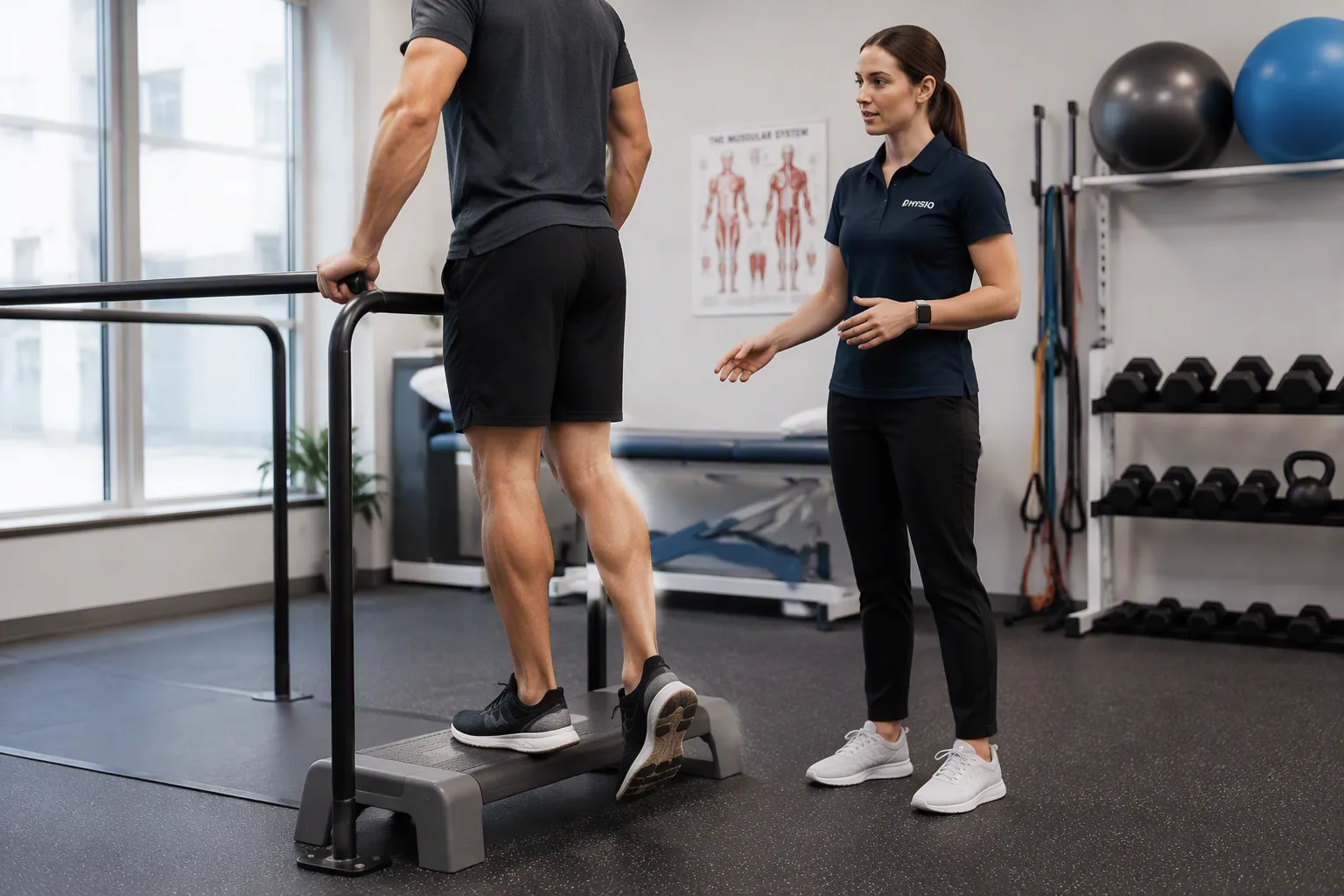
Eccentric calf raises form the cornerstone of your achilles tendonitis recovery. You perform these slowly and deliberately. Stand on the edge of a step. Rise up using both feet. Then lower yourself using only your affected foot. The lowering phase takes three full seconds. You complete three sets of fifteen repetitions. You repeat this twice daily for twelve weeks. Research from a 2008 pilot study found that 67% of patients returned to their pre-injury activity levels after following this exact protocol. Your therapist adjusts the load based on your pain response. You may feel discomfort during the exercise. That discomfort should never exceed a mild level. Sharp pain signals you to reduce the load.
Plantar fascia stretching targets the tissue along the bottom of your foot. You cross your affected leg over your opposite knee. You pull your toes back toward your shin. You hold this position for ten seconds. You repeat it ten times. A randomised controlled trial with two-year follow-up showed remarkable results. At the end of that period, 92% of patients reported satisfaction with this approach. A remarkable 94% experienced decreased pain. The exercise costs nothing. It requires only a few minutes daily. Yet its impact on chronic heel discomfort proves substantial.
Balance training completes your exercise foundation. Proprioception describes your body’s ability to sense its position in space. This skill diminishes after injury. You rebuild it through single-leg balance exercises. Start with your arms outstretched and eyes open. Hold the position for sixty seconds. Progress to arms crossed and eyes closed. Research demonstrates that proprioceptive training reduces the risk of recurrent ankle sprains by 36%. The numbers needed to treat stand at thirteen. That means for every thirteen people who complete this training, one additional recurrence gets prevented. These exercises strengthen the stabiliser muscles around your ankle. They train your foot to react quickly on uneven surfaces. They prevent the rolling motion that triggers re-injury.
Your therapist progresses these exercises gradually. You master each level before advancing. This graded approach ensures healthy tissue remodelling through controlled loading. Passive treatments alone rarely suffice. Your structured programme provides the active ingredient for lasting recovery.
Supporting Your Recovery at Home
Cold therapy manages flare-ups effectively. Apply an ice pack to the affected area for fifteen to twenty minutes. Repeat this several times daily during acute pain episodes. The cold reduces inflammation and numbs the discomfort. Never apply ice directly to your skin. Wrap it in a thin towel first.
Your footwear choices matter enormously. Supportive shoes with good arch control reduce strain on your plantar fascia. Avoid walking barefoot on hard surfaces. Choose trainers with adequate cushioning for daily activities. Your therapist can recommend specific features to look for.
Simple self-massage techniques complement your professional treatment. Roll a frozen water bottle under your arch for two to three minutes. This combines cold therapy with myofascial release. You can also use your thumbs to apply gentle pressure along the tight bands of tissue. This physical therapy approach extends the benefits of your clinic sessions between appointments.
Activity modification allows healing without complete rest. You may need to reduce your running mileage temporarily. You might switch to swimming or cycling instead. These low-impact alternatives maintain your fitness while protecting your healing tissues. Your therapist guides these adjustments based on your specific presentation.
Your commitment to this home programme determines your outcome. Each exercise builds strength. Each stretch improves flexibility. Each balance session restores stability. Together, they resolve your foot pain at its source. They prevent recurrence. They return you to the activities you love. The effort you invest today pays dividends in pain-free movement tomorrow.
Your path to lasting relief starts right here. Sports therapy at Watford Injury Clinic targets the root cause of your discomfort. You move beyond temporary fixes. You achieve genuine, lasting recovery.
Mike Minerve brings over twenty years of clinical expertise to your care. His comprehensive one-to-one assessment uncovers exactly why your foot pain persists. His tailored rehabilitation plan empowers you to heal actively. You gain strength. You restore flexibility. You reclaim your active life.
You do not need to be an athlete to benefit. This specialist care welcomes everyone. Book your appointment today. Take the first step back to pain-free movement. Return to the activities you love.
FAQ
How many sessions will I need?
Most patients require three to six sessions spaced one week apart. Over eighty per cent experience significant improvement within this timeframe. Your commitment to home exercises determines how quickly you return to pain-free activity.
Can I continue exercising during treatment?
Yes, with modifications. Your therapist adjusts activity based on your pain response. Low-impact alternatives like swimming maintain fitness while protecting healing tissues. Complete rest rarely helps—guided movement accelerates recovery.
What causes chronic tendon problems?
Achilles tendinosis develops when repeated overload triggers tendon degeneration instead of simple inflammation. Tight calves, overpronation, and sudden activity increases drive this process. Recognising it early allows effective treatment and prevents long-term damage.
Will my pain return after treatment?
Your personalised plan reduces recurrence risk substantially. Corrective exercises fix underlying biomechanical faults. Maintaining strength, flexibility, and proper footwear keeps foot pain away permanently. Recovery lasts when you address root causes, not just symptoms.