
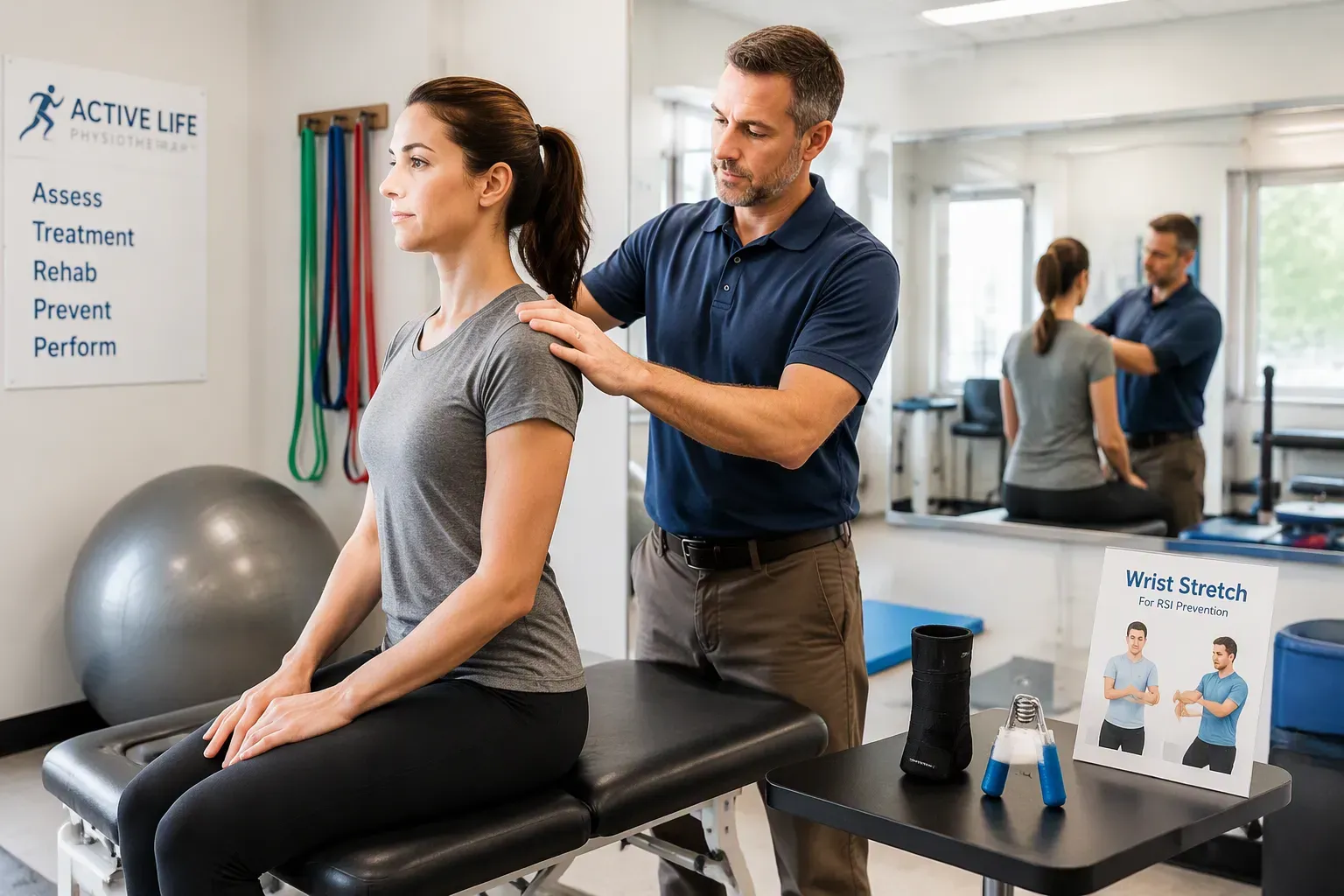
Treating Postural Imbalances and RSI with Sports Therapy
Treating postural imbalances and RSI with sports therapy involves a structured combination of movement assessment, manual therapy, targeted strengthening, flexibility training and ergonomic advice. You do not have to accept daily discomfort as normal.
Poor posture affects 60.2% of office workers. This statistic shows how common your struggle is. The good news? Help is available, and small changes make a big difference.
You will discover what causes these conditions, which techniques bring relief, how quickly you can expect improvement and how to prevent recurrence. Sports therapy offers a clear path forward. Your alignment can improve. Your pain can ease. Lasting relief starts with the right guidance and your commitment to change.
Key Takeaways
Sports therapy treats postural imbalances and RSI with hands-on techniques and targeted exercises.
You can prevent long-term pain by taking movement breaks and setting up your workstation correctly.
Most people feel relief after the first session, but lasting correction takes weeks of consistent effort.
Daily home exercises and good ergonomics are key to preventing recurrence.
Seek help early to reduce treatment time and avoid chronic pain.
Causes of Postural Dysfunction and RSI
Postural dysfunction does not appear overnight. It builds from a poorly arranged desk, years of slouching, and sustained sitting. Prolonged sitting reduces deep stabiliser muscle activation by around 30 percent, rounds your lower back, and shifts load onto passive ligaments. Your body adapts to what you repeat, creating muscle imbalances that distort your postural alignment.
Common Postural Imbalances
Forward head posture tops the list. Every inch your head moves forward adds over 10 pounds to your cervical spine. A low monitor adds up to 10 kg of loading. This pattern tightens your upper back, weakens deep neck flexors, and produces posture-related strain and imbalance that sports therapy addresses directly.
Rounded shoulders follow a similar logic. Chest muscles shorten; muscles between your shoulder blades weaken. Your shoulders roll forward, your upper back rounds. Add anterior pelvic tilt, where tight hip flexors and weak glutes rotate your pelvis forward, leaving your spine under tension. These postural imbalances affect office workers and active people alike. Physical therapy for postural dysfunction targets these patterns, releasing tight tissue and waking up weak muscles.
How RSI Develops
Repetitive strain injury builds when you repeat the same movement without adequate recovery. Common triggers include:
Repetitive keyboard and mouse use for hours without a break
Awkward positions, such as reaching, twisting, or overhead arm work
Forceful activities and prolonged use of vibrating tools
Stress that keeps your upper trapezius constantly contracted
These overuse injuries grow quietly, then announce themselves through aching, tingling, or weakness.
Poor posture accelerates RSI because rounded shoulders and forward head carriage load tendons unevenly. In turn, the condition worsens your alignment by encouraging guarded movement. Sustained spinal flexion also produces creep, a progressive deformation of spinal tissues. McGill and Brown (1992) found residual creep-stretch after prolonged lumbar flexion, raising your injury risk soon after sitting. Postural dysfunction and repetitive strain feed each other. Tackling postural dysfunction early, before musculoskeletal injuries take hold, is the smartest path. Sports therapy finds the root cause, restores movement, and guides your postural correction.
Recognising the Signs and Symptoms
Your body sends clear signals when something is wrong. You just need to know what to look for.
Physical Warning Signs
Persistent neck and shoulder tension tops the list for most people. You may notice a dull ache that builds through your workday. Headaches often follow, especially at the base of your skull. Lower back pain and stiffness make prolonged sitting unbearable. Tingling or numbness in your hands and wrists signals nerve involvement. You might also experience reduced range of motion in your shoulders or neck.
These symptoms rarely appear alone. They cluster together and interfere with your daily life. Simple tasks like typing, driving, or lifting become harder. The table below shows how postural dysfunction and RSI differ in their typical presentation.
Condition | Commonly Reported Signs and Symptoms |
|---|---|
Postural Imbalance | Rounded shoulders; forward head position; uneven shoulder or hip height; persistent lower back pain; stiffness or restricted movement; balance problems; discomfort during prolonged sitting or standing |
Repetitive Strain Injury (RSI) | Pain; stiffness; numbness; weakness; interference with daily tasks; conditions such as carpal tunnel syndrome |
Early warning signs of RSI include persistent tingling, a dull throb, loss of grip strength, and slight finger stiffness after activity. Prolonged forward head posture compresses nerves at your neck. This compression can manifest as pain or weakness in your fingers and palms.
When to Seek Help
You should seek professional help when postural pain persists beyond a few weeks. Symptoms that interfere with work, household tasks, or exercise need attention. Numbness, tingling, or weakness in your limbs requires prompt assessment. These signs suggest nerve involvement and demand urgent evaluation.
Do not wait for symptoms to worsen. Early intervention prevents small problems from becoming chronic conditions. A sports therapist can identify the root cause of your postural dysfunction and create a targeted treatment plan. You deserve relief, and help is closer than you think.
How Sports Therapy Assesses Posture and RSI
Assessment forms the foundation of effective sports therapy. Your therapist needs a complete picture before designing your rehabilitation programme.
Postural Assessment Techniques
Your sports therapist observes your static posture from multiple angles. They check alignment of your spine, shoulders, hips and knees. This clinical assessment reveals areas of tension or weakness that contribute to your postural dysfunction.
The table below shows what therapists examine during a postural assessment.
Body Region | Anterior View | Posterior View | Lateral View |
|---|---|---|---|
Spine | — | Screen for scoliosis using acromion and scapular spine as reference points; check symmetry of shoulder blades | Assess spinal curvature for lordosis and kyphosis; evaluate pelvic tilt angle between ASIS and PSIS (normal ~15°) |
Shoulders | Compare shoulder level and clavicle angle | Observe shoulder and scapular symmetry | Check whether earlobes align with middle of shoulders to detect forward head position |
Hips | Compare iliac crests and ASIS for levelness | Compare iliac crests and posterior superior iliac spine | Assess pelvic tilt angle between ASIS and PSIS |
Knees | Compare apex of patella height; assess valgus/varus positioning | Assess knee position for abnormal valgus or varus | Observe whether knees are hyperextended |
A posture plumb line from ears to ankles guides the assessment. Your ears, shoulders, hips, knees and ankles should all align on this line.
Functional Movement Screening
Your therapist then asks you to perform movements such as squats, lunges or overhead reaches. These tasks reveal dysfunctional movement patterns that static observation cannot detect.
The Selective Functional Movement Assessment (SFMA) is described as being “rooted in best evidence base practice” and is used as a movement-based diagnostic system to clinically assess 7 fundamental movement patterns in individuals with known musculoskeletal pain, including postural dysfunction.
At Watford Injury Clinic, Mike Minerve combines thorough assessment with over 20 years of clinical experience to find the root cause of your pain. He uses physical therapy techniques and physical therapy for postural dysfunction to address your specific needs. This detailed postural assessment ensures your treatment targets the real problem, not just the symptoms.
Key Sports Therapy Techniques for Postural Correction with Physical Therapy
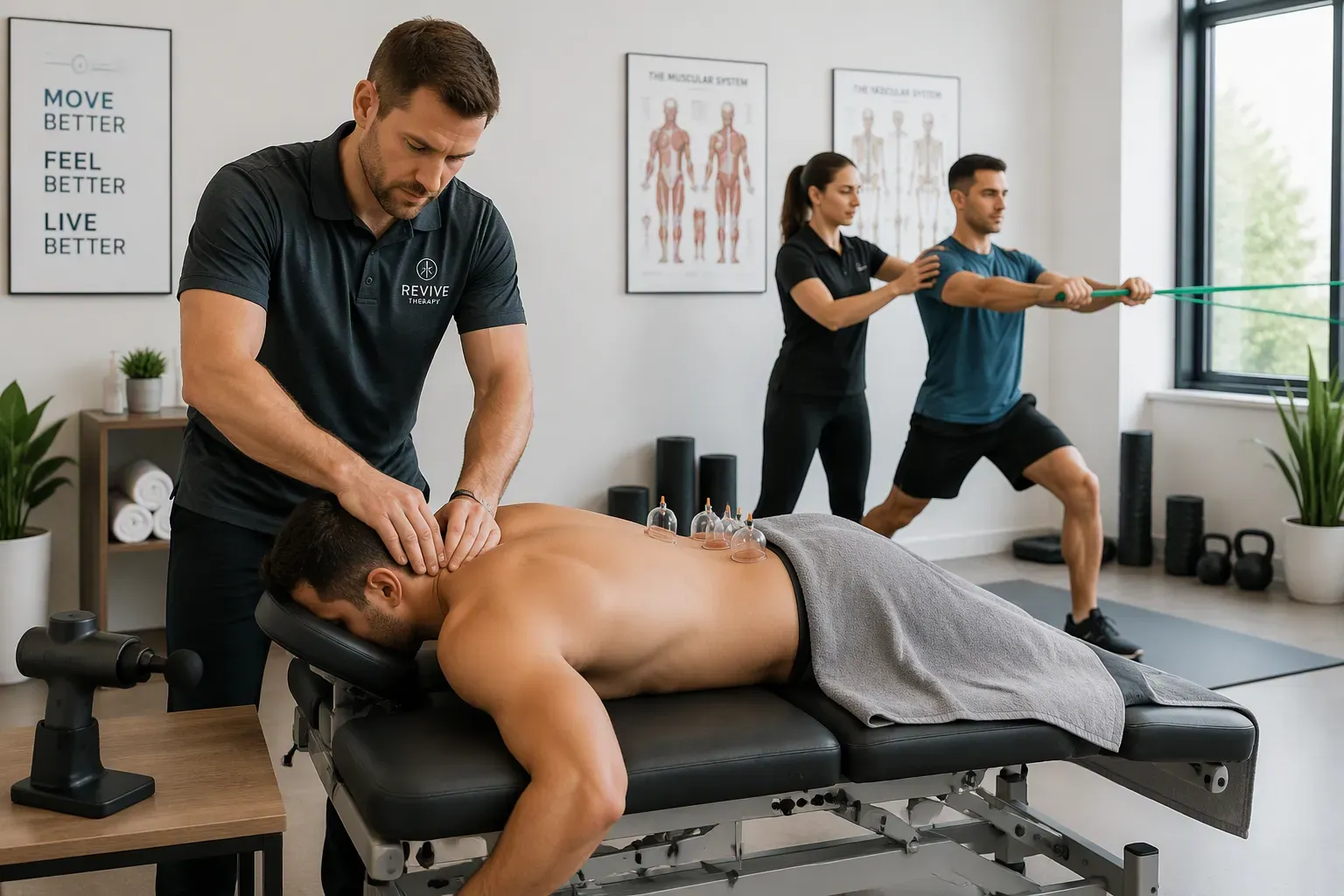
Treating postural imbalances and RSI with sports therapy demands a dual strategy. You need hands-on work to release tension. You also need targeted exercise to strengthen weak muscles. Sports therapy delivers both sides. Your postural correction with physical therapy plan combines graded exercise and hands-on techniques from the first session. This twin approach creates lasting change, not temporary relief.
Manual Therapy and Soft Tissue Release
Manual therapy forms the first pillar of your rehabilitation. Your therapist applies deep tissue sports massage to release hypertonic muscles in your neck, shoulders and lower back. Joint mobilisation and manipulation restore movement to stiff spinal segments. Vacuum cupping lifts tight fascia and encourages fresh blood flow. Massage gun therapy delivers rapid, targeted percussion to break down adhesions. These physical therapy techniques reduce pain quickly and prepare your tissues for strengthening work. Many clients feel immediate freedom of movement after one session. Deep tissue work lengthens shortened muscles. Joint mobilisation frees restricted joints. Together, these methods reset your resting tension and calm protective spasms.
At Watford Injury Clinic, Mike Minerve combines traditional sports and remedial soft tissue therapy with advanced osteopathic and chiropractic manual therapy techniques. This integrated model treats muscular and joint restrictions together. You receive hands-on care built around your postural assessment. The goal is simple: release what is tight, wake up what is weak. Manual therapy alone cannot hold healthy alignment. Corrective exercise provides the anchor. These postural correction techniques work hand in hand.
Corrective Exercise and Strengthening
Hands-on treatment prepares the ground. Rehab exercises build the new pattern. Correcting postural dysfunction requires your active participation. A tailored exercise programme, designed for your specific needs, retrains your body to adopt better alignment. Movement retraining turns conscious effort into automatic habit.
Specific exercises stabilise your spine and pelvis. The glute bridge activates your glutes and hamstrings. It trains correct hip extension and corrects anterior pelvic tilt without compressive or shearing forces on your spine. The modified plank builds isometric endurance in your transverse abdominis, rectus abdominis and obliques. It reinforces neutral spinal alignment under tension. Pelvic tilts activate your deep abdominal muscles. They improve neuromuscular control of your pelvis and lumbar spine. Wall sits build lower-body endurance and reduce lumbar strain. Chin tucks mobilise your neck and strengthen your upper back, directly countering forward-head posture. The sequence mirrors your assessment findings. Each exercise earns its place in your recovery.
A simple sequence works well:
Glute bridge: trains hip extension; corrects pelvic tilt
Modified plank: builds deep core endurance
Pelvic tilt: improves pelvic and lumbar control
Wall sit: reduces lumbar strain; supports postural stability
Chin tucks: counter forward-head tilt
Start with low repetitions. Add resistance gradually. Your therapist progresses the programme as you improve. Consistency matters more than intensity. Ten minutes daily beats one long weekly session. Physical therapy for postural dysfunction rarely succeeds without hands-on input. Sports therapy links the two. Each session combines soft tissue release with corrective exercise. For repetitive strain, balanced strengthening reduces uneven tendon loading. Protected wrists and shoulders move with less pain. Some corrective exercise happens in the clinic under supervision. The rest happens at home. Your homework matters as much as your sessions. Short daily practice reinforces the new patterns. Your rehabilitation journey requires that partnership. These techniques work together to remould your postural habits and ease repetitive strain. Your therapist guides you through postural retraining until correct alignment feels normal. Improving posture becomes a natural by-product of the work you do each week. Over time, the correct position becomes your default position. You will notice the difference within weeks, and that change lasts.
Stretching, Postural Retraining and Activity Modification
Targeted Stretching for Flexibility
Tight muscles pull your body out of line. Your nervous system keeps signalling a chronically short muscle to contract. It simultaneously tells the opposing muscle to relax. That antagonist becomes long and weak. This pattern creates muscle imbalances that stretching alone cannot fix.
Consider an anteriorly tilted pelvis. Tight hip flexors and lower back muscles pull your hamstrings and glutes into a lengthened, weak position. You feel hamstring tightness. Stretching that hamstring will not solve it. You must release the actually tight muscles. Then you strengthen your abdominals, glutes and hamstrings to restore balance. The same logic applies to rounded shoulders. Tight chest muscles need stretching. Weak upper back muscles need strengthening. Your sports therapy programme targets both sides of every imbalance.
Postural Retraining and Ergonomic Advice
Your posture reflects repeated habits. Postural retraining teaches your nervous system to adopt new patterns through awareness and daily repetition. You practise sitting, standing and moving with correct alignment under supervision. Biofeedback gives you real-time awareness of muscle activation you cannot otherwise feel. This movement retraining rewires habitual postural dysfunction over time.
Ergonomic changes support your rehabilitation. Position your monitor so your neck stays neutral. Sit fully back so the chair supports your spine. Keep elbows bent about 90 degrees with wrists straight. Take movement breaks every 30 minutes. Stand, roll your neck gently or shrug your shoulders. These small changes reduce strain on your postural muscles.
For RSI, strapping and taping may support weakened joints and reduce strain during activity. Zinc oxide tape provides strong joint support for ankles, wrists and fingers. Taping can also enhance proprioception, helping you adjust movements to avoid additional strain. Your therapist may use physical therapy techniques like taping alongside corrective exercise. This combined approach accelerates improving posture and prevents relapse.
How Quickly Can You Expect Relief?
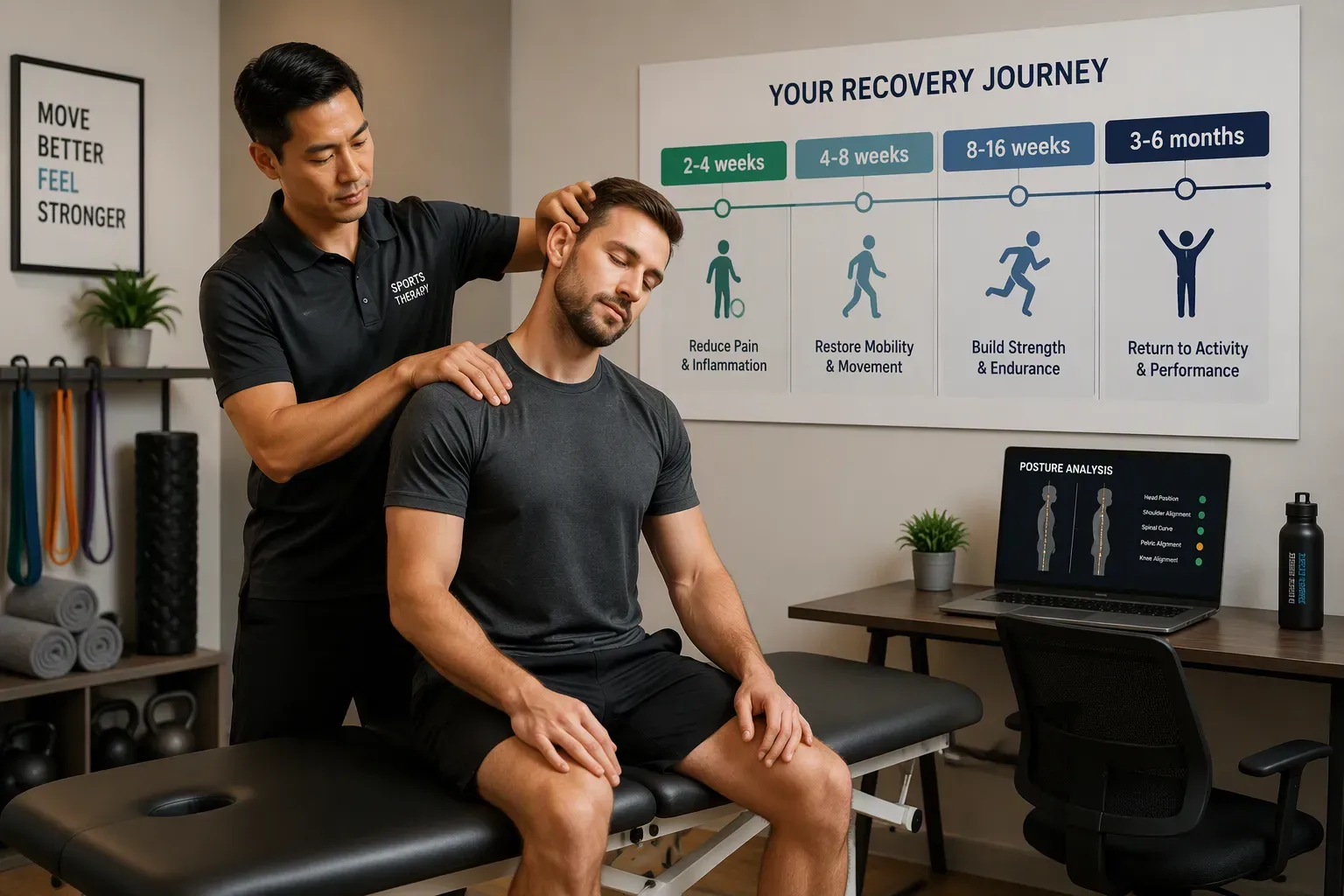
You want to know when your pain will ease. Many clients feel immediate relief after their first session. Manual therapy releases tight tissue and calms protective spasms quickly. Lasting correction takes time. Your body needs weeks to rebuild strength and retrain movement patterns. Sports therapy speeds this process, but your commitment drives the final result.
Typical Recovery Timelines
Your recovery depends on severity and how long you have struggled. Mild repetitive strain with recent onset often improves within 2–4 weeks. Moderate muscle or joint injuries typically need 4–8 weeks. Chronic back, neck or posture-related pain may take 8–16 weeks. Tendon, nerve or multifactorial conditions can require 3–6 months of phased rehabilitation.
Condition Type | Expected Recovery Duration |
|---|---|
Mild repetitive strain (recent onset) | 2–4 weeks |
Moderate muscle or joint injury | 4–8 weeks |
Chronic back/neck/posture-related pain | 8–16 weeks |
Tendon, nerve, or multifactorial conditions | 3–6 months (phased) |
Early intervention changes everything. One review found that early professional intervention for moderate symptoms reduces average treatment duration by 63% compared to waiting until symptoms become severe. Do not delay. Your rehabilitation starts the moment you seek help.
Factors That Influence Healing
Many variables shape your recovery. Age, overall health and fitness levels all play a role. Sleep quality matters more than most people realise. Previous injury history can slow progress. Stress levels affect muscle tension and pain perception. Your daily habits and workplace ergonomics either support or undermine your healing.
Factor Category | Specific Factors Influencing Recovery Time |
|---|---|
Physiological and lifestyle factors | Sleep quality; fitness levels; previous injury history |
Health and stress factors | Individual stress levels; general health |
Treatment-related factors | Whether contributing factors are addressed; compliance with treatment recommendations |
Ergonomic and behavioral factors | Workplace ergonomics; daily habits |
Psychological factors | Fear and anxiety; negative beliefs about pain |
Studies have linked psychological factors such as fear and anxiety to persistent pain. One review found that people with negative beliefs about their pain were more likely to experience ongoing symptoms and disability.
Your adherence to home exercises accelerates progressive rehabilitation significantly. Consistent daily self-management practices reduce recurrence rates by 72%. At Watford Injury Clinic, clients consistently praise Mike’s thorough assessments and effective treatments that often bring immediate relief. His 20 years of clinical experience ensure your postural dysfunction gets targeted care from day one.
Preventing Postural Imbalances and RSI from Returning
You have felt the relief. Now you want to keep it. Preventing postural imbalances needs a plan for daily movements and regular maintenance. Sports therapy provides the strategy. Your daily habits decide the outcome.
Daily Habits and Workplace Adjustments
Your body mirrors what you repeat. Sitting for eight hours straight recreates the same strain. Small interruptions break the cycle. Make these habits your baseline:
Set a timer to stand and move every 30–45 minutes.
Take phone calls on your feet and walk while you talk.
Alternate between sitting and standing with a sit-stand desk.
During breaks, try neck rolls, chest openers, trunk rotations and wrist extensions.
Practise a seated reset each hour: tuck your pelvis, lift your chest, soften your shoulder blades.
Your workstation needs the same care. Adjust your chair to the correct height. Position the top of your monitor at eye level. Keep your keyboard and mouse within easy reach. Add proper lighting to avoid leaning forward. These setup changes support proper posture throughout the day.
One patient reported recovering from hand pain and learning ways to prevent recurrence. The clinic provided valuable ergonomic advice and even helped draft a letter to the employer with recommended workplace adjustments.
Long-Term Maintenance with Sports Therapy
Regular maintenance sessions with a sports therapist catch problems early. You build strength between visits. Your therapist tracks changes in your body and adapts your plan. This ongoing support prevents postural dysfunction from returning.
Rehabilitation does not end when pain stops. Your body needs time to lock in new movement patterns. A combined approach works best. The table below shows the three layers.
Part of the Plan | What It Does |
|---|---|
Sports therapy | Releases tight muscles and guides rehabilitation |
Ergonomic changes | Reduces sustained stress on the spine |
Home exercise | Strengthens weak muscles and restores balance |
Take one office worker from St Albans. He battled chronic neck and shoulder pain for months. A series of sports therapy sessions released the tight muscles. Ergonomic changes at his desk stopped the strain from rebuilding. Within weeks, his pain faded. Today, he attends monthly maintenance visits and rarely thinks about his old discomfort.
Your therapist spots postural dysfunction early, during a maintenance session. They release the tension before it spreads. Improving posture becomes a natural part of your routine. You will not think about it; you will simply feel better.
Treating postural imbalances and RSI with sports therapy follows a clear structure. You start with assessment, then manual therapy, corrective exercise, stretching, postural retraining and activity modification. Each step builds on the last.
Take action now. Book a session with a sports therapist and adjust your daily routine. Fix your workstation. Move more often. These changes compound over time.
Watford Injury Clinic welcomes everyone, from office workers with posture-related pain to recreational athletes. Mike Minerve offers tailored one-to-one sessions. Sports therapy addresses your postural dysfunction and supports your rehabilitation. Consistent effort and expert guidance bring lasting relief. Your postural health deserves attention. Sports therapy can change your life.
FAQ
Can sports therapy really fix my posture?
Yes. Sports therapy targets the root causes of postural imbalances. Your therapist releases tight muscles, strengthens weak ones and retrains movement patterns. This structured approach corrects postural dysfunction over time. You will see lasting changes when you commit to the plan.
How does a sports therapist assess postural problems?
Your therapist observes your posture from multiple angles. They check spinal alignment, shoulder height and pelvic tilt. Functional movement screening reveals dysfunctional patterns during squats, lunges and overhead reaches. This thorough postural assessment identifies exactly where your postural imbalances originate.
Do I need a referral to book an appointment?
No referral is necessary. You can book directly with a sports therapist. At Watford Injury Clinic, Mike Minerve offers one-to-one sessions tailored to your specific postural needs. Online booking makes starting your rehabilitation simple and quick.
How long until I notice improvement in my posture?
Many clients feel relief after the first session. Mild postural issues often improve within 2–4 weeks. Chronic conditions may need 8–16 weeks of consistent rehabilitation. Your adherence to home exercises and ergonomic changes speeds up your postural correction significantly.
Can sports therapy prevent postural problems from returning?
Absolutely. Regular maintenance sessions catch recurring tightness early. Your therapist adapts your plan as your posture improves. Combined with daily movement breaks and proper workstation setup, sports therapy helps you maintain healthy postural alignment for the long term.